Showing posts with label Health. Show all posts

Wednesday, 15 June 2016

Healthy Hot Chocolate


The winter chill is here & you may be craving particular foods (mostly chocolate) to keep you warm! But why are you having these cravings?

What causes food cravings?
  • Low energy
  • Boredom
  • Poor diet
  • Nutrient deficiencies
  • Stress
  • Depression
  • PMS
  • Insufficient calorie intake
  • Alcohol/Hangover
  • Dealing with emotions
  • Food Intolerances
  • And much more!

Specific chocolate cravings can be more specifically linked with magnesium deficiency.

Foods high in Magnesium
  • spinach
  • broccoli
  • pumpkin seeds
  • sunflower seeds
  • sesame seeds
  • flaxseeds
  • cucumber
  • green beans
  • celery
  • kale
Alternative you can take a magnesium supplement such as Bioceuticals ultramuscleze night or P5P

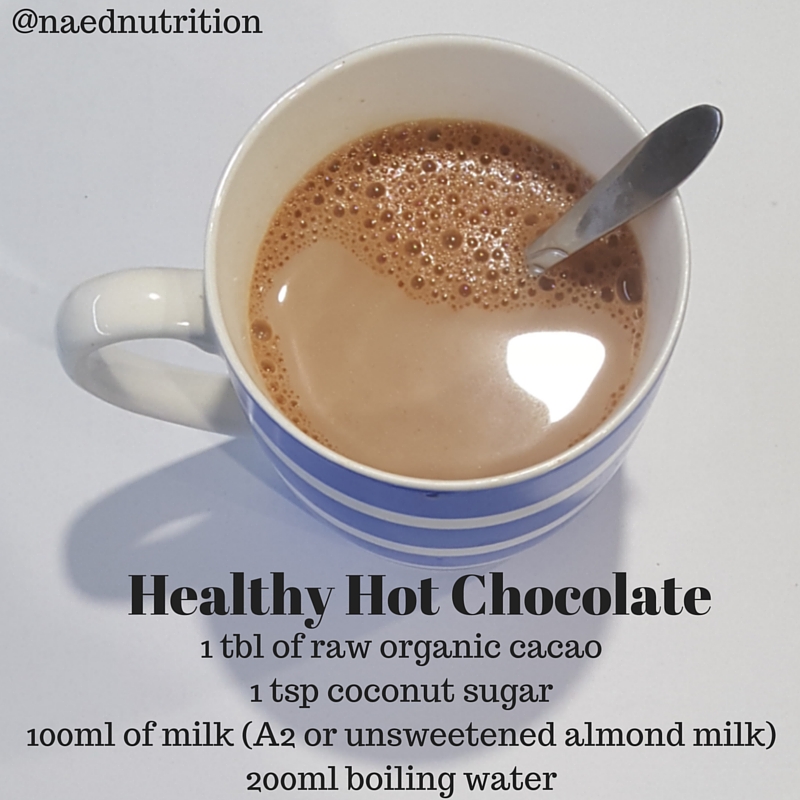
A great way to satisfy those chocolate cravings is with our Healthy Hot Chocolate recipe

Ingredients
  • 100ml A2 milk (or almond milk)
  • 1 tsp of coconut sugar
  • 1 tbl of raw organic cacao (cacao vs cacao blog post)
  • 200ml boiling water
Method
  • Boil the kettle
  • In a mug add milk, coconut sugar and cacao. Milk thoroughly
  • Add boil water and mix well

Nutrition Information
Servings per package:
1.00

Serving size:
325
ml

Average
Quantity per Serving

Average
Quantity per 100 g

Energy
335
kJ
103
kJ
Calories
80
cal
25
cal
Protein
4.1
g
1.3
g
Fat, total
4.0
g
1.2
g
- saturated
3.1
g
0.9
g
Carbohydrate
6.3
g
1.9
g
- sugars
5.2
g
1.6
g
Sodium
49
mg
15
mg


To find out how to adjust your nutrition intake and reduce cravings contact us at admin@naednutrition.com.au

Friday, 27 May 2016

Top 7 Food Additives to Avoid


Additives are found everywhere in our packaged products but what do those little numbers mean and which ones should you look out for? Here are our top 7 list of food additives to avoid:  

1. Aspartame # 951 C found in Diet Foods & diet soft drinks, equal,
Linked to many health problems including cancer, asthma, nausea, depressions, hyperactivity, seizures.  Causes dizziness, headaches & hallucinations

2. Olestra (Fat substitute) found in chips, crackers (no fat/reduced fat)
Linked to diarrhoea cramps, flatulence, increases appetite, decrease the ability for fat soluble vitamins to be absorbed.

3. Erythrosine #E127 (red) found in jams, sugar lollies, toppings & fillings, red cordials and soups
Linked to concentration issues, increase in hyperactivity in kids, nerve toxin

4. MSG #621 found in Chinese, salad dressings, soups, chips
Linked to Asthma, hyperactivity, depression, mood changes, sleeplessness, nausea, migraine, linked to infertility, teratogen, convulsions, abdominal discomfort. See text re other hidden sources of MSG
Causes headaches, dizziness, migraines, convulsions

5. Sodium Nitrate #251/250 found in Bacon, ham, salami, corned beef, hot dogs
Linked to Hyperactivity, behavioral problems, asthma, headaches, dizziness, possible carcinogen. Prohibited in foods for infants and young children.

6. Sulfites #222/223/228 eg: sodium bisulphite (222) Found in wine, beer and dried fruit
Linked to migraines and asthma attacks in some people

7.  Tartrazine #E102 (yellow) found in lollies, desserts, cereal and soft drinks
Linked to Hyperactivity, behavioral problems, skin rashes, migraines and thyroid problems.

Remember they won’t always be listed under these names or numbers, for example Tartrazine #E102 is listed as FD&C yellow 5 or C.I. 19140. Be consumer aware & download the free app Additive Alert!

For more information on becoming consumer aware with your foods contact us at admin@naednutrition.com.au

Wednesday, 27 April 2016

What is a Nutritionist?

Nutritionists are trained allied health professionals who provide safe, evidence-based dietary and nutritional advice to assist in the management of health and prevention of disease. Poor diet, the ingestion of harsh chemicals and eating foods with a low nutritional value can have a detrimental effect on health, however through correct nutritional advice more diseases can easily be prevented, treated and even cured. It also involves providing advice to clients based on the physiological responses of their body to diet through metabolic pathways (how the energy and nutrients from food is absorbed and used in the human in the body).

Nutrition is focused on the science of nutrients and how they are digested, absorbed, transported, metabolized, stored, and eliminated by the body. Besides studying how food works in the body, nutritionists are interested in how the environment affects the quality and safety of foods, and what influence these factors have on health and disease.


At Naed Nutrition, we know that everyone is different and as such are passionate about personalised nutrition. There is no one size fits all for clean eating, what works for one doesn’t work for some.

Each person has their own goal, their own likes and dislikes with foods, has a different lifestyle, and different health concerns whether it be past or present.

This means that each person receives the nutrition service that will fit them.
Consults will consist of a variety of health, diet and lifestyle related questions with the upmost confidentiality and privacy

We offer a range of personalised services from consults right through to meal plans including as much or as little accountability as required.


Naed Nutrition endeavours to go above and beyond for our clients. For more information of how we can help you achieve your goal simply pop on our website www.naednutrition.com.au or email admin@naednutrition.com.au

Monday, 10 August 2015

Traditional vs Microwave Rice

Brought to Australia around 1850 by Chinese gold prospectors, rice has become a staple of our diet. Their varieties continue to expand as we as consumers demand convenience and nutritional value, from microwave steamed rice to wild black rice, there is an expanse of rice varieties to choose from in your local super market that offer different textures, taste and nutritional value. The table below summarizes some common rice varieties and details their cost and nutritional value.

Variety of Rice
Cost per 100g
Nutrients per 100g


Protein
Carbohydrate
Fibre
Potassium
Magnesium
Niacin
Sodium
Brown
0.32
7.6
72.5
3.9
266mg
111mg
6.4mg
<0.5mg
Microwave
Brown
1.32
4
34
3
130mg
52mg
1.2mg
<5mg
Jasmine
0.32
7.2
78.8
<1
78mg
0
0
<5mg
Microwave Jasmine
1.32
2.9
33.5
<1
9mg
0
0
<5mg
White
0.25
6.8
79.1
<1
82mg
0
0
<5mg
Microwave
White
1.32
3
39
<1
47mg
0
0
<5mg
Brown Rice & Lentils
0.47
10.2
68.4
6.4
342mg
108mg
5.6mg
<5mg
White Rice & Quinoa
0.47
9.1
70.3
4.7
313mg
134mg
2.7mg
<5mg
Wild Rice Mountain Blend
1.10
8.2
74.4
4.1
207mg
117mg
2.7mg
<5mg


Rice can be a healthy alternative to refined carbohydrates and when high in fibre and minerals acts as a hearty addition to any lunch or dinner. Brown and wild rice have the best nutritional value in term of total fibre, protein and minerals and brown rice is one of the cheapest options coming in at 32 cents per 100g, which can be mixed with quinoa and black rice to add nutritional value while saving on cost compared to purchasing combination packs. White rice is your cheapest option especially when bought in bulk coming in at 25 cents per 100g, regretfully white rice loses its bran and germ during processing leading to a diminished fibre and mineral value producing a refined product that has a high glycemic load, meaning it significantly raises blood sugar levels in a short amount of time therefore increasing risk of insulin resistance and diabetes when consumed regularly.

The table compares some common rice varieties of fresh and microwave options, specifying significantly decreased nutritional value in the microwave options. Microwave options may be fast and convenient but they have an increased cost and contain a range of additives and preservatives. For example, microwave options contain cooked rice & water with added vegetable & sunflower oil, antioxidants, stabilisers (some of which contain soy), and distilled monoglyceride. Stabilisers act to increase shelf life, while distilled monoglyceride is used to remove impurities, these two chemicals are triglycerides or better known as trans fats and therefore can increase risks of heart disease, cholesterol, cancer and obesity when consumed regularly.


 Sarah Campbell